Whimsical Poppy Flowers Backgrounds: A Designer's Toolkit for Vibrant Projects
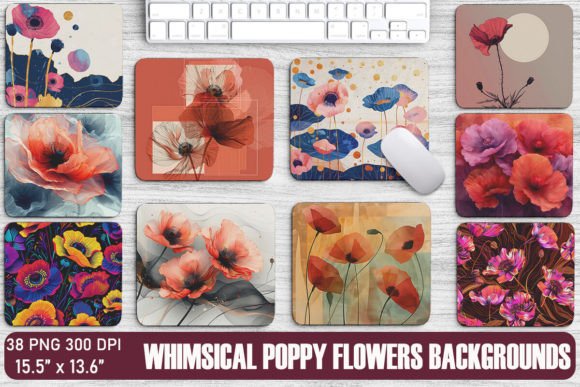
Finding the right backdrop can feel like searching for a missing puzzle piece. You have the perfect font for your headline, a compelling call to action, but the canvas feels flat. That's where a versatile set like the Whimsical Poppy Flowers Backgrounds collection comes into play. This isn't just a single image; it's a suite of 38 distinct PNG files, each bursting with the bold, organic energy of poppy blossoms. Designed for creators who need both impact and flexibility, this collection offers a practical solution for injecting color and life into a wide array of projects.
Anatomy of a Versatile Design Asset
At its core, this collection is built on a foundation of quality and usability. Each file is a high-resolution 300 DPI PNG, sized at an approximate 15.5 x 13.6 inches. This specification is crucial. It means you're not dealing with a low-quality web graphic that will pixelate when printed. The large format allows you to resize the designs significantly—whether scaling down for a delicate business card or up for a small banner—without the typical loss of clarity that plagues lesser assets. The PNG format, with its transparency capabilities, offers a clean edge for layering over solid colors, other textures, or photographs, giving you immense creative control.
The visual personality of these backgrounds is unmistakably "whimsical." This isn't a photorealistic or overly rigid botanical illustration. Instead, expect a stylized, artistic interpretation of poppies. The blossoms likely feature flowing lines, a sense of movement, and a rich, saturated color palette that ranges from fiery reds and oranges to softer pinks and deep burgundies, often accented with lush greens and contrasting neutrals. This style strikes a balance between being eye-catching and sophisticated, avoiding a childish look while maintaining a sense of playful charm. It's this character that makes the collection so adaptable.
From Digital Screens to Physical Products: Practical Applications
The true value of a design asset is measured by its range. This poppy collection shines precisely because it's not a one-trick pony. Consider the digital landscape first. For social media graphics, a vibrant poppy background can stop the scroll. It provides an instant mood—joyful, passionate, or creative—for an Instagram post promoting a new product, a Facebook event announcement, or a Pinterest pin for a recipe or craft tutorial. For web design, these can serve as hero section backgrounds for lifestyle blogs, florists, or artisan product sites, immediately setting a thematic tone. They can also be used as subtle section dividers or behind testimonials to add visual interest without overwhelming the text.
Transitioning to print, the applications multiply. A graphic designer working on packaging design for a gourmet tea or a artisan soap could use a poppy motif to convey natural ingredients and handcrafted quality. In editorial design, these backgrounds could grace the pages of a magazine feature on gardening, spring fashion, or even a recipe spread. For event planners and individuals, the utility is straightforward: stunning wedding invitations, save-the-dates, or party banners. The consistent theme across the 38 files allows for creating a cohesive suite of materials—matching invitations, thank-you cards, and table numbers—without looking repetitive.
For the small business owner or crafter, this is where commercial licensing (which is typically included with such professional assets) becomes a game-changer. Imagine a boutique selling handmade journals or planners. Using these poppy backgrounds on the covers or as interior page designs instantly elevates the product. A café could use them for seasonal menu inserts. A podcaster could create unique episode artwork. The collection moves beyond being a mere background and becomes a core component of a brand identity for businesses in the wellness, floral, artisan, or lifestyle spaces.
Integrating Poppy Backgrounds into Your Design Workflow
Simply having the files is step one. Using them effectively requires a bit of strategic thinking. The first consideration is visual hierarchy. A busy, colorful background can compete with your foreground text or logo. The solution is contrast. Pair these vibrant backdrops with clean, sans-serif fonts in white or a dark, muted color for maximum readability. A bold display font for a headline can work, but test it carefully. The whimsical style of the poppies might pair better with a modern serif or a clean script font than a highly ornate one.
Color is your next lever. Don't feel confined to the colors in the PNG. Use photo editing software to apply a color overlay or a duotone effect. This allows you to match the background precisely to your brand identity colors, ensuring consistency across all materials. You can also desaturate the image slightly or increase its brightness to make foreground elements pop. Remember, the goal is for the background to support your message, not drown it.
When evaluating if this collection is the right fit for a project, ask a few key questions. Does the "whimsical" style align with the project's tone? Is it for a audience that appreciates artistic, floral motifs? For a corporate finance report, probably not. For a bridal magazine, a yoga studio, or a children's book illustration, absolutely. Test the backgrounds by placing your actual content—your logo, a sample block of text, key images—on top of them. Does it feel balanced? Is the text legible at various sizes? This hands-on test is more valuable than any description.
Ultimately, the Whimsical Poppy Flowers Backgrounds collection is a premium font-adjacent asset—a creative font for your canvas. It's a set of design assets that solves a common problem: the need for a professional, thematic, and flexible backdrop. By understanding its strengths in both digital and print realms, and by applying basic design principles of contrast and color management, you can leverage these poppy designs to create work that is not only beautiful but also effective and memorable. It’s a toolkit that respects the creator’s need for quality and adaptability, turning a simple background into a foundational element of compelling visual communication.