Stunning Watercolor Deer Patterns for Creative Projects
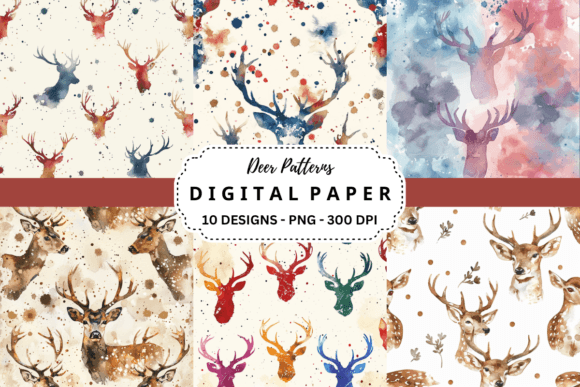
There is a specific kind of visual magic that happens when the organic bleed of watercolor meets the structured elegance of a pattern. When you introduce a subject as evocative as a deer, the result is a design asset that feels both timeless and trendy. If you are working with the Watercolor Deer Patterns Backgrounds, you are holding a collection of ten high-quality, individual PNG files that offer a massive 3600 x 3600 pixel resolution at 300 DPI. This isn't just a random assortment of clip art; it is a versatile toolkit designed to bridge the gap between rustic charm and modern digital clarity.
As a designer or creative professional, you know that the texture of your background sets the stage for your entire composition. These backgrounds are characterized by their soft, fluid washes of color, often mimicking the unpredictable nature of pigment on wet paper. The deer motifs within these patterns can range from realistic sketches to abstract silhouettes, creating a visual personality that is serene, nature-inspired, and deeply artistic. The appeal lies in the imperfection—the slight bleeding of edges and the variation in opacity—which gives your final product a handmade, artisanal quality that rigid vector graphics simply cannot replicate.
Integrating Nature-Inspired Art into Brand Identity
When we talk about brand identity, we are talking about the story you tell before a customer ever reads a word. Utilizing Watercolor Deer Patterns Backgrounds speaks to a narrative of nature, tranquility, and organic beauty. This makes the asset particularly potent for brands in the wellness, outdoor, children’s education, or artisanal food sectors. However, do not limit your thinking to the obvious. A modern tech startup looking to soften its image or a boutique hotel wanting to evoke a sense of woodland retreat can use these patterns to great effect.
The visual hierarchy in your design is crucial. Because these backgrounds are rich in texture, they act as a supporting character rather than the protagonist. They provide depth without demanding all the attention, provided you use them correctly. For instance, in social media graphics, a watercolor deer pattern can fill negative space effectively, allowing your typography to pop. Because the files are 300 DPI, you have the flexibility to zoom in on specific sections of the pattern to create a more abstract texture, or zoom out to show the full motif for poster & banner design.
Practical Applications: From Print to Digital
The versatility of the Watercolor Deer Patterns Backgrounds is one of its strongest selling points. The high resolution ensures that the artwork remains crisp and professional across various mediums. Here is how you can leverage these assets in your workflow:
- Invitations and Stationery: For wedding planners or stationery designers, these patterns create a stunning backdrop for invitations card designs. The soft watercolor aesthetic pairs beautifully with serif fonts for a classic look or script fonts for a romantic vibe.
- Packaging Design: If you are involved in packaging design for products like candles, soaps, or organic teas, wrapping the product in a watercolor deer pattern adds perceived value. It transforms a simple box into a gift-worthy item.
- Fashion and Textiles: The seamless nature of these patterns makes them ideal for fashion projects. Think about tote bags, scarf prints, or even custom upholstery. The 3600x3600 pixel size allows for large-scale printing without pixelation.
- Scrapbooking and Digital Journals: For hobbyists and content creators, these PNGs are perfect for digital scrapbooking or creating custom planner stickers. The transparent or textured backgrounds blend well with other digital elements.
Technical Specifications and Design Workflow
Understanding the technical side of your design assets ensures a smoother creative process. The Watercolor Deer Patterns Backgrounds come in PNG format, which is essential for preserving the transparency and subtle color gradients of watercolor art. Unlike JPEGs, which can introduce compression artifacts around the soft edges of the paint, PNGs maintain the integrity of the image.
The dimensions—3600 x 3600 pixels—are calculated specifically for print readiness. At 300 DPI (dots per inch), this translates to a 12-inch by 12-inch square, which is the standard size for many scrapbook papers and print-on-demand templates. This makes the collection immediately usable for print on demand design projects and printing labels without needing to upscale the image in Photoshop, a process that often degrades quality.
Pairing Typography with Watercolor Textures
One of the most common challenges in web design and editorial design is ensuring readability over textured backgrounds. When using the Watercolor Deer Patterns Backgrounds, your choice of typography becomes a strategic decision.
Because watercolor can be visually "busy," you need typefaces that offer high legibility. Sans serif fonts are often a safe bet for body text, offering clean lines that contrast with the organic flow of the watercolor. However, for headlines, a bold display font or a heavy modern typography style can work wonders. The key is contrast. If the background has cool, flowing blues and greens, a sharp, geometric typeface in a dark charcoal or crisp white will anchor the design.
Avoid using overly intricate handwritten fonts or thin script fonts directly on top of detailed areas of the deer pattern. Instead, use a "knockout" technique where you place a semi-transparent shape or a solid color block behind your text to separate it from the background noise. This maintains the professionalism of your layout while still showcasing the beauty of the pattern.
Evaluating Project Fit and Commercial Use
Before diving into a project, it is wise to evaluate if the specific aesthetic of the deer pattern aligns with your goals. While a premium font or asset is high quality, it is only effective if it matches the tone of the message. For example, a corporate law firm might find the deer pattern too whimsical for their logo design, whereas a children's book author would find it perfect.
When incorporating these backgrounds into commercial font projects or client work, always review the licensing terms. Most high-quality assets like these allow for broad commercial use, but it is your responsibility as the creator to ensure compliance. Whether you are designing for a local bakery or a large-scale marketing campaign, having the right to use the artwork is non-negotiable.
Furthermore, consider the concept of font pairing not just with type, but with other graphical elements. If you are using a creative font that has a lot of personality, a busy deer pattern might compete for attention. In such cases, consider using the pattern only on the envelope or the back of a business card, keeping the front clean. This approach maintains consistency across the project without overwhelming the viewer.
Maximizing Impact in Marketing Materials
For marketers and entrepreneurs, the goal is always engagement. Visual content drives interaction, and the uniqueness of a watercolor texture can stop a user from scrolling. Using Watercolor Deer Patterns Backgrounds in your Instagram stories, Facebook headers, or email newsletter banners adds a layer of sophistication that standard stock photography lacks.
Think about the seasonality of the content. Deer patterns are incredibly effective during autumn and winter campaigns, evoking feelings of warmth and nature. However, with the right color palette adjustment—perhaps boosting the saturation or changing the hue in post-production—you can adapt these backgrounds for spring launches as well. This adaptability extends the lifecycle of your design assets, providing better return on investment for your creative library.
Ultimately, the value of these backgrounds lies in their ability to tell a visual story instantly. They provide a ready-made atmosphere that you can build upon. By combining the organic beauty of watercolor deer with strong typography and strategic layout, you create designs that feel bespoke, professional, and deeply connected to the natural world. Whether for personal joy or commercial gain, these patterns are a robust addition to any creative toolkit.