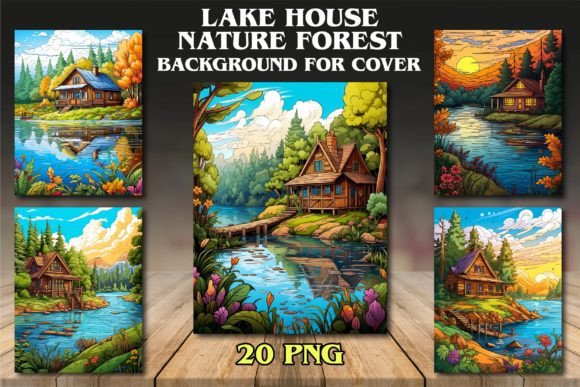
Lake House Nature Forest Backgrounds: Your Toolkit for Authentic Branding
In a digital landscape saturated with high-gloss, sterile interfaces, there is a growing hunger for the tactile, the imperfect, and the natural. We see it in the resurgence of analog photography, the demand for organic textures in web design, and the pivot towards "lo-fi" aesthetics across social media. For designers, entrepreneurs, and content creators, the challenge is no longer just creating something that looks "clean"—it is about creating something that feels alive. This is where the Lake House Nature Forest collection steps in. It is not merely a set of images; it is a comprehensive design asset library that bridges the gap between digital precision and the chaotic beauty of the natural world.
Visual Identity: More Than Just Pretty Trees
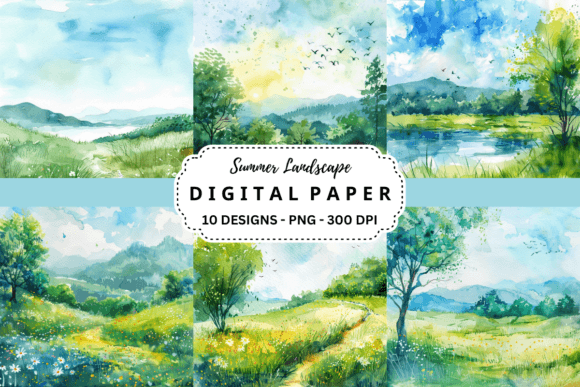
At its core, the Lake House Nature Forest bundle is a curated collection of artistic book covers and backgrounds. However, to label them simply as "backgrounds" would be to undervalue their utility. Visually, these assets strike a delicate balance. They possess the intricate detailing of hand-crafted illustrations—think the veining of a leaf or the ripples on a lake surface—rendered at a professional 300 DPI resolution.
The personality of this collection is one of serenity and mindfulness. Unlike aggressive, high-contrast stock photography, these designs offer a softer visual hierarchy. The color palettes tend to lean towards earthy tones, deep forest greens, twilight blues, and warm, organic neutrals. For a brand strategist, this "personality" is invaluable. It allows a brand to project an image of calm authority and groundedness. Whether used as a full background for a landing page or cropped into specific sections for editorial design, the textures provide depth without overwhelming the foreground content. It is a masterclass in adding visual interest while maintaining a professional, cohesive aesthetic.
Strategic Applications: From Packaging to Pixels
The versatility of the Lake House Nature Forest assets lies in their ability to adapt to various mediums. For those in packaging design, these backgrounds offer an immediate solution for artisanal products. Imagine a tea brand, a candle company, or a wellness supplement line; wrapping these products in the intricate patterns of the forest instantly communicates a story of purity and nature. It bypasses the need for complex vector illustration, offering a ready-made texture that feels premium and established.
In the realm of digital marketing and web design, these backgrounds solve the common problem of "hero image" fatigue. Instead of using the same generic stock photos of people smiling at laptops, a marketer can use a subtle, textured overlay from this collection to set a mood. For bloggers and publishers, the included book cover designs are not just placeholders—they are case studies in composition. They demonstrate how to layer typography over complex imagery, offering inspiration for magazine layouts, e-book covers, and social media headers. The high-resolution PNG format ensures that even when zoomed in for a crop on an Instagram story or a Pinterest pin, the details remain crisp, avoiding the pixelation that plagues lower-quality assets.
The Psychology of Aesthetics: Building Trust Through Texture
Design is ultimately about communication, and the Lake House Nature Forest collection communicates specific values. In brand identity, consistency is key. By utilizing these nature-inspired textures across a website, email newsletters, and print collateral, a business creates a tactile experience for the user. This consistency fosters trust. When a customer sees a cohesive visual language—perhaps a subtle leaf pattern in the header of a website that matches the texture on the product packaging—they perceive the brand as more established and thoughtful.
Furthermore, the "therapeutic" quality of these designs cannot be overlooked. In a post-pandemic world, audiences respond positively to visuals that offer an escape. Using these backgrounds in social media graphics can lower the "scroll speed." The intricate details invite the eye to linger, which increases engagement rates. For content creators, particularly those in the mindfulness, lifestyle, or travel niches, these assets serve as a visual shorthand for "slow living." They help in creating an environment where the audience feels safe to pause, read, and engage.
Practical Implementation: Maximizing Your Asset Library
To get the most out of the Lake House Nature Forest bundle, one must move beyond simple drag-and-drop placement. Here is practical guidance for integrating these assets into your workflow:
- Evaluate the Hierarchy: Because these backgrounds are rich in detail, your typography needs to work harder. Pair these textured backgrounds with clean, sans serif fonts for body text to ensure readability. For headlines, a bold serif font or a clean display font can stand up to the visual weight of the forest imagery.
- Opacity and Overlays: Do not be afraid to manipulate the assets. Reducing the opacity of a background image to 20% can turn a busy forest scene into a subtle, grainy texture that adds warmth to a minimalist web design. Alternatively, using a "Multiply" blending mode can integrate the texture seamlessly into colored blocks.
- Commercial vs. Personal Use: Always review the licensing. These assets are powerful tools for commercial projects—client work, merchandise, and digital products—but understanding the specific terms of use ensures you protect your business and respect the creators.
- Testing Pairings: Before finalizing a design, test how your specific brand colors interact with the earth tones of the backgrounds. Often, muted pastels or stark whites work best against the deep greens and browns of the forest themes.
Beyond the Obvious: Unconventional Uses
While these are marketed as book covers and backgrounds, creative professionals should think outside the box. A designer could slice these images into geometric shapes to create unique social media graphics for an organic food brand. A podcaster could use them as visualizers for video episodes. Even in logo design, a texture from this pack could be used as a clipping mask within a logomark to give it an organic, stamped feel.
Ultimately, the Lake House Nature Forest collection is a utility belt for the modern creative. It acknowledges that in a world of flat design and vector minimalism, there is still a massive appetite for the organic, the detailed, and the natural. It provides the tools to build brands that don't just look good, but feel grounded, authentic, and deeply connected to the timeless beauty of the natural world.